

In a world as wrong as this one, all we…
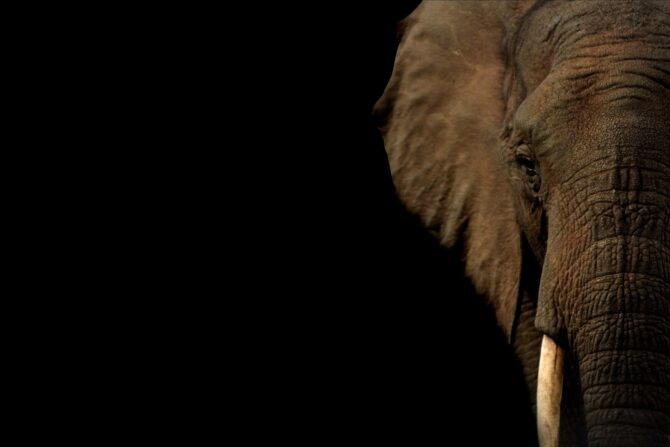
Riding the Elephant
A note from the author: This is an extract from a journal I kept while I traveled through South Asia some years ago on a writing assignment. I always keep journals when I travel, because some of the information might be useful later if it’s a research trip for a novel, or if I’m on assignment as a journalist. But I also do it because putting words to paper has always been my way of processing experience. I had no plans for this entry, I just jotted it down at the end of the day. Apart from one grammatical realignment and a tiny bit of context I’ve tucked into it, I surrender it here, unretouched.
If it contains any revelations about craft, they might be about writerly habits, and going to the source. I had no audience in mind—it’s a journal entry. But I’m surprised to see the level of detail, enough information to make the experience accessible to someone who wasn’t there. That’s habit, to pay attention to everything: sights, smells, sounds, physical sensations, the lay of the land. How can I say this? Writing involves no magic, only work. Attend, and translate everything into language as you go along. It becomes second nature. It becomes voice. It involves putting aside the self, and taking up everything else.
Another thing that surprised me here was the incipient presence of narrative. It’s just a fragment, no real plot, but it does have a beginning and end. That, too, is a writer’s habit. The difference between fiction and real life is meaning. The story has to tell me something, or it wasn’t a story. Whenever some funny or appalling thing happens in my life, invariably someone says, “Oh, you’ll use that in a story.” And I think, no, I won’t. Not unless, or until, I can figure out what it means. It takes certain writerly muscles to extract insight from incident, but those muscles get stronger with practice. After these many years I tend to see little narratives everywhere I look. —BK
■■■
After ten hours in a bus on the road from Kathmandu, I watched the steep, terraced mountainsides relax into the broad, flat plain that the Nepalese call the terai. The road followed alongside the river and bore the weary scars of heavy annual flooding, evidence of past springtime snowmelts from the Himalayas that swell this river to a hundred times its present, lazy size. Our bus bounced along the silty floodplain furred with maize and buckwheat, and intermittently passed through little plots of saal forest whose jungly wildness spoke of a Nepal I’d not yet seen. Mountains comfort me, and so do forests, but these were such a far cry from home. From the high plains we’d descended into the sub-tropics, home of elephants, rhinos and tigers. We were headed for the Chitwan reserve, an uncharted forest straddling the Indian border, one of the largest pieces of habitat the world has left for these and other Asian jungle creatures.
We entered from the northeast, leaving our bus at the park’s edge because such traffic is not allowed. We hoisted our luggage and then ourselves into the back of a big, rugged truck that bumped over the rocky span of floodplain and then peeled right through the river’s clear water. During the high water season, our driver explained, elephants carry visitors across. I couldn’t imagine it. We checked into the lodge, a collection of thatch-roofed huts scattered through the jungle. Inside we found narrow cots, cold water and no electricity, camping accommodations, which seemed perfect in this location. I am a rural person; I felt at home. These few days in the Chitwan forest were planned as a respite after several weeks of hard work. My assignment, interviewing lowest-caste, so-called Untouchable women, had taken me into some of the poorest neighborhoods and villages outside of Delhi and Kathmandu. Which is to say, some of the most challenging places that any human on this planet calls home. Each day I’d awakened in a different strange room, trying to adapt to a kind of human crowdedness I had not previously imagined. Now I sat alone and inhaled the forest.
While we ate lunch, a Nepalese ranger arrived to say he was going to patrol the jungle along the park’s northern boundary, the means of conveyance would be elephants, would we like to come along? There is only one answer to that kind of question. The four of us—my husband, two daughters and I—followed the ranger to the elephant-maintenance area. Without giving ourselves time to over-think this plan, we climbed the steps of a high platform and from there, carefully, as if getting into a boat, stepped out onto the large, table-like wooden saddle of our family’s mount. Her name was Chichaankali. We sat down in the saddle facing sideways, two on each side facing out, holding onto the saddle’s wooden rail, our legs dangling underneath it. The elephant’s driver, a kid of maybe nineteen, sat on Chichaankali’s head with one bare foot pressed gently into the flesh behind each of her ears, like the pedals of a car. He steered by pushing on one ear or the other. A chain that ran under her chin seemed to be the brake, as he pulled it sometimes with a “whoa” or a sharp scolding. Our elephant was unusually distracted because of her eighteen-month-old son, who ran along beside us and sometimes nudged under her legs, wanting to nurse.
What a rocking, rolling gait an elephant has, like a horse galloping in very slow motion, but as much side-to-side as front-to-back. It’s similar to horseback riding in the way that the body must learn to roll with the motion and lean forward on the uphill climbs. We passed through grass as high as the elephant’s back, following the river, spying ducks and cranes along the water’s edge. When we turned into the jungle, we quickly learned different riding skills as we constantly leaned and ducked to avoid tree branches.
But what a ride. We went for hours. As the afternoon deepened, our elephant lagged far behind the ranger’s and we stopped at the river so mother and baby could take a long drink. Even through the wooden saddle I could feel our mount’s huge lungs expand as she inhaled, sucking gallons of water into her trunk, and then the sharp exhalation and loud rush of water as she blew it from her trunk into her mouth, down her throat. The quantities involved are not sips but volumes, maybe about the number of gallons contained by the hot water heater in my home; the force of its movement I would liken to a fire hose. I had never paused to consider how much water an elephant trunk can contain. There is in fact a good deal of elephant anatomy one learns by sitting on its back, looking down at the feet, the coarse-haired flanks, the mottled backs of the ears. And of elephant murmurs, elephant talk. They speak to one another mainly by infrasound, a rumbling too low for humans to hear. From the lungs they set these vibrations into the ground, conducted through the feet I suppose, with sufficient force that their remarks can reach across many miles if necessary, to speak to other elephants at great distances. I had read about this, a fairly recent discovery by elephant scientists in answer to the old mystery of how elephant herds could know one another’s whereabouts across vast areas, and convene at appointed locations. It is one thing to know the theory. But the first time I felt infrasound from my position on the animal’s back, I registered it with some shock. It called to mind those vibrating beds called Magic Fingers that used to be in hotel rooms, rumbling up a massage for the price of a quarter. In this case, the price was motherhood. Every single time her baby strayed too far into the broad-leaved understory, Chichaankali let forth a magnificent rumble-rumble, and back to her side her bouncing boy came running.
There is nothing subtle about an elephant lolloping through a forest. Ahead of us, huge red and white cranes flapped away startled from their roost in a dead tree. Wild boars scuttled off noisily through the grass, and the jungle fowl—progenitors of domestic chickens—hunkered and scuttled away through the brush, eyeing us with exactly the beady resentment our barnyard hens at home cast toward passing cars in the driveway. We kept an eye out for tigers and did not see them, but the small hairs stood up on the back of my neck at the thought of these creatures sharing the forest with us, even invisibly. Especially, invisibly. The young driver was vigilant, the elephant even more so. It occurred to me that my touristic yearning to catch sight of a tiger was echoed by an equal and opposite yearning in the heart of the mother who carried us. We were all looking out for the tiger.
At dusk we returned, our mount slowing her pace along the cobblestone riverbank. The sky clotted with clouds that reflected in pink precision on the river’s glazed surface. Jungle fowl crowed from the forest, a cockadoodle-doo so familiar it seemed impossible in this place. I held on to my ten-year-old’s hand, squeezing it tightly, reminding her and reminding myself we were really here. We were riding through the wilderness of Nepal on the back of an elephant. Many times in the past two weeks I had second-guessed my decision to bring my family along on a work trip that had proven much more difficult than I’d expected. We’d been sick, afraid, weary, hungry, crowded, bewildered, and achingly sad in the presence of so many people with so little place for living. I couldn’t say how many times I’d wished us all back home as I navigated those days, poised on the cusp of flight, longing to run away. And now I was so glad we had come this far. ■