


Monic Ductan was born and raised in north Georgia, so…
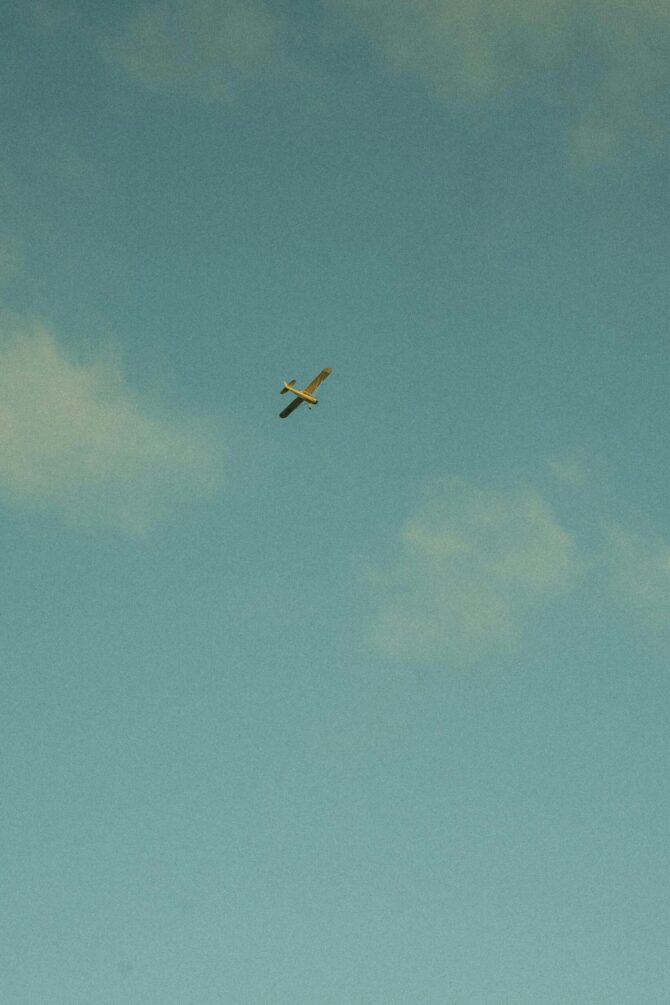
A Ghost in Flight
2005
When the kid stumbled through the oaks onto his property, Bruce almost dropped his shovel. The boy followed Bruce’s retriever down the hill toward the cabin, the dog’s coat glowing golden in the sun. When the kid looked up and froze, Bruce felt a melting sensation, something like dry ice in his throat. He looked twice to be sure. But it wasn’t Jonah.
“’Lo there,” Bruce called. The kid stood in place like he’d been caught, which was strange. Because he didn’t dress like a hoodlum, all the loose clothes and short-brimmed hats teenagers wore. In fact, he dressed a hell of a lot more like he was going on safari: nylon pants, a brimmed hat, and a bandana clinging cowboy-style to his neck. He glanced to the side, but Bruce beckoned him down the hill. And looking real self-conscious, he came.
The kid surveyed the cabin’s eaves, the antlers mounted above the porch, and the south side of the yard, where beds of vegetables rose from wooden boxes. High chicken wire walled the boxes, some of which sported trellises made from quarter-inch conduit pipe and nylon netting. He glanced over at the chickens milling outside their coop, then at the blueberry bushes hugging the pole barn, the gravel driveway, and the three apple trees at the edge of the property.
Bruce took a good look at him. He was tall, had to be in high school. But his face held a softness, something that made him seem younger than his height. His eyes curved in the same round-almond shape as Jonah’s but held a different hue.
“You lost, kid?” Bruce asked.
“Well, actually…” His nose wrinkled, perhaps at the scents of peat moss and compost rising from the boxed gardens. He fished a folded paper from his pocket and unfurled it. It was creased into quadrants, and when he held it upright, white sand spilled from its folds. He pointed to the corner of one quadrant. “I think I’m right here.”
Inked across the paper were black whorls. Bruce peered closer. They were topography lines. “You know that doesn’t work without a compass, right?” Bruce said.
“The Lake’s my compass. It’s always west.”
“I see… Now, where on God’s green earth did you get a topo map of Grand Mere?”
“Google,” the kid mumbled.
“Noodle?”
“Google. It’s a search engine.”
Bruce glanced at the pole barn. “You know about engines?”
“It’s a search engine. Like, on the Internet, you know? You type things in, and it finds them.”
“What are you searching for?”
The boy’s mouth hung open, as if hoping an answer would spring from his tongue. Jonah used to do that.
“I’m just giving you a hard time, kid. Name’s Bruce. Bruce Kuipers.” He held out his hand.
The kid nodded politely but didn’t shake it. “Tyson Fischer.”
“How old are you, Tyson?” Bruce asked, lowering his hand.
“Fifteen, but I’ll be sixteen in August.” The dog wove around the kid, sniffing his pants and licking his knuckles.
“Tolkien here seems to like you.”
“You named him after the author?”
“Yeah,” Bruce said, scraping a boot against the box to peel the dirt from its sole. Linda had named the dog, but Tyson’s question surprised him. He didn’t know kids still read. “So what are you doing in the woods?”
“I…I—sorry, I’m not, like, trespassing or anything. Just learning to survive.”
“Aren’t we all?” Bruce said with a grin. “Tell you what, I’ll let you in on a secret. You want to survive? Get a shovel, use the shit life throws at you for compost, and plant a garden. That’s all there is to it.”
Tyson looked down at the boxed gardens. It was early June, and besides the lettuce and chard, only green shoots sprang from the soil, indistinguishable from one another. “What are you growing?”
“All kinds of veggies. In this box, tomatoes, peppers, eggplants, some basil…” And not knowing why, Bruce prattled on about compost and soil nitrates and mixing vermiculite in for a quick-draining base. Tyson nodded, his gaze snapping toward the trees every now and then while Bruce went on about Michigan’s growing season for tomatoes and peppers and cucumbers until Tolkien lay down in the dirt and yawned.
“I—I should probably go,” Tyson said, glancing at the eight-point rack and then back at Bruce. “But thanks for all that.” And before Bruce could say anything more, he pivoted and said, “So long!” over his shoulder, his hat and brown hair bouncing as he disappeared behind the wall of oaks from where he’d come.
■■■
Bruce opened the door to the pole barn that evening, and in the dark could just make out the rounded silhouettes of airplane parts. He flicked on the lights, and there was his bare Cessna, all cabin and fuselage, the ground littered with braces, ailerons, and the propeller. He made his way over the cracks in the concrete to the cockpit and entered. The buzzing from the barn’s fluorescents dulled as he pulled the plane door closed, leaving only the sound of his exhalations.
A film of dust coated the dash, but he could still read the gauges. Altimeter: zero. Fuel: empty. Airspeed: zilch. He slid his feet to the pedals, curled his fingers around the steering yoke, and took a deep breath. He looked to the empty co-pilot seat, conjuring up the image of Jonah on the first day he’d taken his five-year-old son airborne. Those brown, curious eyes scanning the counsel, mouth agape. The sky had held a color so rich, Jonah called it blueberry. They flew through the blueberry sky, the sun shimmering off rivers and inland lakes, turning them emerald.
“Look out the window, Jonah,” Bruce said, as he had that day, the two of them skimming over the tapestry of green forests below. Beyond was a sliver of sand and the flat eternity of Lake Michigan, the sun sparkling across its swells.
The boy’s swinging feet slowed as Bruce named the places the coastline protruded. There’s South Haven, he said, And look! That river leads from Saugatuck to Kalamazoo. There’s an old lumber town called Singapore buried beneath all that sand.
Jonah’s headset looked enormous against his profile, and he breathed into the microphone, as quick as a hummingbird, as deep as a bellows.
“What’cha think of that, bud?” Bruce asked.
Jonah’s white-blond head angled to the window, and he stared wide-eyed through its glass, Bruce witnessing what few others would have the chance to glimpse: flight from the sight of a boy.
Jonah grinned up at Bruce who clapped a hand on his shoulder and said, “Mommy’s not gonna believe this, huh?”
A shadow leapt onto the nose of the plane. Lucky, the black cat who resided in the pole barn, stretched on her haunches and curled into a ball where the propeller should have been. And Bruce found himself once more in the dim barn, grounded, the seat empty beside him, the roof of his mouth dry from talking aloud. He swallowed, fumbled at the cabin door, and then angled away from the plane. He flicked the light switch, waiting for the cat to scamper into the starry night before closing the barn door.
The Big Dipper glowed overhead. Inside the house, Tolkien wagged his tail as Bruce scratched the dog behind the ears. He took his wristwatch from the nightstand. He never wore it during the day, when his hands fished into the loam of the earth, but at night, cold as a handcuff from the air-conditioning, it tethered him from the weightless feeling of the world between dreams.
He settled down to the swooshing sound of the sheets against his legs, the same sound ghosts sang when they haunted the living. Tolkien rested his chin on the bed and whimpered, and Bruce stretched out his hand and stroked the dog’s muzzle. The watch’s second hand bounced in the spaces between the numbers and dashes, around and around in its tiny orbit.
■■■
Bruce hacked at the broccoli stalk with the blade of his shovel. The summer heat had deformed the crown, its overall shape reminding him of the first brain scan he’d seen from the hospital. He thought it a sick joke. A mistake. A mix-up in the records. Faulty equipment. The incompetence of the staff. Of the doctor himself. A tumor? How could a seven-year-old have a brain tumor? He had refused to believe it, but he had vomited nonetheless on the concrete steps in the parking garage. And now this: a twisted, deformed vegetable he sliced with steel and buried in a storm of brown earth. He strained and heaved and swore until he leaned against the handle panting.
“Are you okay?”
He whirled around. It was that kid, Tyson, his head tilted sideways, gangly arms at his sides. “Found a shovel,” Tyson said, pinching a trowel by the hole in its handle. It swung like a pendulum.
“You might need a bigger one down the line,” Bruce said.
Tyson pointed it at the raised garden bed and asked, “So how do I start one of those?”
Bruce wiped the sweat from his brow. “Depends what you want to grow.”
“Not broccoli…” Tyson said, eyeing the plant.
Bruce took a deep breath, nodded, and explained the advantages of raised beds, how to start a compost pile, and why, this late in the season, transplants were a better bet than seeds. He barely heard his own words, transfixed by the leftward part in Tyson’s hair, the same part Jonah had sported when he still had hair.
Bruce gestured toward the pole barn. “Might be a real shovel in there,” he said. “Go on. Have a look.”
Tyson disappeared into the barn, re-emerging moments later with a spade and wide eyes. “There’s a plane in there!”
Tolkien barked, and Bruce tossed the dog a stick. “My old Cessna. A Skyhawk 172.”
“Could it run?”
“Oh sure. It’d be a big job though. I’d have to reattach the wings, probably overhaul the whole engine, oil the ailerons, figure out that propeller. The whole nine yards…”
“How long would that take, you think?”
“’Bout four months. Three if I hit it every day.”
“What if you had help?”
“Oh? You’re an experienced aircraft builder, Mr. Fischer?”
“No. But I’m a fast learner.”
Bruce pressed the shovel in the dirt and leaned against it, taking a sideways glance at the broccoli stalk.
“C’mon, Bruce, let me help.” Tyson said, almond eyes widening. “I’ll even do for free, as a trade for all the gardening lessons.”
■■■
Sawdust fountained onto the pole barn’s floor. The smell of it dried Bruce’s nostrils. “Your turn,” he said. Tyson approached the miter saw, squinting to line up the blade and the crude pencil mark scratched over the two-by-four. Tyson pushed the board to the fence and reached for the handle, glancing over his shoulder.
“I just pull the trigger and bring it down?”
“Cleanly,” Bruce said with a nod.
He squeezed the trigger and his hands shot off the machine.
“What’s wrong?”
“The thing’s having a seizure!”
Bruce grinned. “It’s supposed to do that.”
Tyson squeezed again, hovering the spinning blade over the board. He brought it down, the saw screaming through the wood, and then up again. “Crap…” he said, holding up an angled end.
“Push it flush against the fence with your other hand,” Bruce said. Tyson heeled his hand against the board and triggered the saw to life. But he wasn’t pushing hard enough.
Bruce sighed, stepping in and putting his left hand over Tyson’s to steady the board. The kid’s arm stiffened. Bruce nearly pulled back, but Tyson hadn’t let go of the trigger. “Like this,” Bruce said over saw’s whine. “Push it that hard. Now bring her down.”
Tyson started to, but his right arm shook.
The hell was wrong with this kid? Bruce wondered. The saw hovered over the wood, the plastic guard peeled back, blade whirling, each steel tooth catching the sixty-watt bulbs in the barn and ricocheting back their light. “Tyson, dammit, bring the saw down.”
Bruce grabbed Tyson’s right hand and forced the handle down. The kid’s knuckles pressed into the concavity of Bruce’s palm. The machine shook something awful—or was that Tyson?—shrieking through the two-by-four and showering their arms in sawdust when Bruce pulled up the handle.
The saw stopped.
“See?” Bruce said, taking his hands from Tyson’s. “Clean break.”
Tyson turned. His almond eyes were wide, his forehead clammy, his skin the color of chemotherapy. Bruce stepped backward, tripping over his feet, catching himself on a sawhorse. “Tyson? What’s wrong?”
“I—I got sawdust in my eye,” he said. Was he crying? He shivered out the door before Bruce could blink. Bruce crimped his fingers around the new-cut board and peered through the glass pane of the pole barn door. Tyson sat in the grass, Tolkien licking color back into the kid’s face. Tyson’s hands moved up and down the dog’s sides, golden fur cresting in the spaces between his fingers. Bruce threw the board to the floor. It slapped the concrete and bounced before coming to a halt. He shouldn’t have raised his voice, shouldn’t have sworn. But really? What the hell just happened?
■■■
The shopping cart held all the things Bruce couldn’t produce at home: milk, butter, bread, meat, soap, cheese, Motrin. He wheeled out of the frozen food aisle, ignoring the kids riding on the front of other carts and the popsicles for which Jonah would have begged.
“Bruce?”
He turned. Shirley Krauss stood by the refrigerators of cream cheese and hummus with a basket full of groceries.
“’Lo, Shirley,” he said and then paused. “It’s good to see you. How are things at the bakery?”
“Busy as usual. Lots of graduation cakes right now. I hired a new gal for the summer, and she’s working out pretty well.”
“That’s good. And Mitchell?” Her son. Jonah’s good buddy since kindergarten.
“He’s headed to Western in the fall. On a hockey scholarship.”
“That’s great. Tell him I said congrats.”
“How are you doing, Bruce?” She paused. “Out there?”
He supposed she meant Grand Mere, the woodsy dunes separated from the rest of Stevensville by a bridge over I-94.
“Just fine, thanks.”
“Alright. Well, if you ever need anything—”
“Thanks, Shirley.”
She gave a nod and turned toward the tea and coffee aisle.
“Shirley?” he called.
“Yes?”
“Listen, I got this kid that wanders on my property every now and then. Seems friendly, but I wondered if you knew anything about him. Says his name’s Tyson.”
“Tyson Fischer? Real sweet boy. Nothing to worry about there. Smart as a whip and quite the soccer player from what I hear.”
“Fischer…”
“Yeah, his father’s a big-wig at Whirlpool. You know, VP of sales or something like that.”
“So he’s well off?”
“Loaded. Has a brother too, who graduated this year. I made his cake.”
“And his mother?”
Shirley pursed her lips. “You know this town, Bruce.”
“Things are rocky with the couple?” Bruce asked.
“She left.”
“Left?”
“Left him. Left Tyson. Left town. Met some doctor on the other side of the Lake, and, well…”
“Damn…”
“Yeah, shame too. Tyson’s such a sweet kid.” She switched the basket to her other hand. “You ever hear from Linda, Bruce?”
“I don’t.”
“I’m sorry about that. Well…” She looked around the store as though she had other places to be. “You hang in there, Bruce, okay?”
“Thanks, Shirley.”
■■■
Bruce used his electric razor to give Jonah a crew cut while Linda jabbered at him about symmetry. “Aw, Jeez, Bruce,” she said. “That’s too short. He wanted GI Joe, not Nikita Khrushchev…” Bruce mumbled a few choice words while Jonah shifted in the kitchen chair and glanced sideways out the window.
“Straight ahead, co-pilot,” Bruce said, taking the boy’s chin in his thumb and the side of index finger and angling it forward. He pointed the razor at the refrigerator. “Eyes on that horizon line.”
“Daddy…”
“I’m almost done, Jonah.”
The cut would ease the technicians’ job of pasting electrodes to Jonah’s head. The razor sawed at Jonah’s hair, blond tufts falling to his shoulders before littering the kitchen floor. It made Bruce queasy, bringing back memories of sheep shearing—the naked animals shivering in the early breezes.
Bruce held up a mirror, and Jonah smiled at the cue ball shape of his head, showing the pink gum of a missing front tooth while Linda swept the floor. “Time to load up the car, buddy. You ready?” Bruce asked.
Jonah knew nothing about white blood cell counts. He only knew that the doctors would make him sit still and prick him with needles. Sometimes, Bruce had to hold him in his lap, wrap his arms around the boy’s squirming body, watch those needles break the skin on Jonah’s arms and fingers, listen to the shrill of his son’s screams.
Jonah’s lip quivered when Bruce said again, in as gentle a voice as he could muster, that it was time to load up the car and not forget the Legos. Jonah bolted out the screen door, Linda shouting after him, her voice catching in her throat. She grabbed the chair to steady herself, and Bruce bounded out the door after him.
Jonah’s bare feet kicked up a flurry of orange leaves as he fled into the trees, where he became shadow among the trunks, vanishing from sight. Bruce found him long minutes later, balled up and crying under an oak. He settled into the leafy bed beside his son. He whispered and hummed and rubbed his back until Jonah allowed Bruce to carry him home, his arms wrapped around his Bruce’s neck, eyes holding that same, penetrating look Bruce had seen loading farm animals into wagons as a kid—a look gravid with trust.
■■■
Bruce rolled from the mattress, splashing cold water on his face in the bathroom and opening the bedroom closet. He yanked the pull chain for the overhead light and between two work shirts found the nightgown Linda had forgotten to take when she left. He peeled it from the wire hanger, about to click off the light when he glanced to the shelf. On it, a dusty box, and inside, an H&R Handi rifle, a first-time hunter’s gun. He’d purchased it while Jonah was in chemo, for when he recovered. Bruce killed the light and stumbled back to bed, Tolkien’s tail thumping against the floor like a heartbeat. He lay back down and pressed Linda’s nightgown over his nose and mouth, inhaling the last hints of perfume she’d worn in the years before cancer.
■■■
Bruce asked Tyson questions that set the kid’s eyes in orbit and his fingers tapping. Like why he kept showing up and offering to help, and why he was so jumpy.
“Probably need pills or something,” Tyson said.
“Nah, you need a father. No pill can fix that.”
Tyson said nothing for a few seconds while Bruce poured water over a row of eggplants.
“Did you ever want a son?” Tyson asked.
“I have a son,” Bruce said, so sharp he surprised himself.
Tyson’s shoulders tightened, but he asked, “Where is he?”
“With his grandma and grandpa,” Bruce said, having buried Jonah in the same plot as his parents.
Tyson leaned on the spade. “All summer? Do you not like him or something?”
Bruce looked away.
“How old is he?” Tyson asked.
Bruce squeezed the shovel’s handle. How old? Did Bruce say eleven years, ninety days, and thirty-four minutes, Jonah’s age when his heart stopped? Or did he say seventeen years, seventy-two days, and whatever godforsaken hour his watch would read had he nerve enough to wear it in the daytime?
“Seventeen.”
“What’s his name?”
“Jonah.”
The weathervane creaked on top of the pole barn.
“I think we’re all done for the day, Tyson.” Bruce said. “I’ll see you tomorrow.”
■■■
With the propeller remounted, the Cessna transformed from a junkyard exoskeleton into a semi-believable aircraft. Bruce fitted a nut and bolt into place while Tyson droned on about hunting. “You can’t just survive on plants in the winter. Gotta down a deer or two, right?”
Bruce grunted. “Want to hand me that socket wrench?”
Tyson eyed the toolbox.
“Thin metal thing with a rounded black end,” Bruce said. “It’s in there somewhere.”
Tyson shifted the contents, and Lucky scurried away in the clattering.
“This thing?” Tyson asked. “Gosh. Looks just like the Neuralyzer.”
“The what?”
“You know, from Men in Black?”
“Who’s in black?”
“It’s a flashy, pen-looking thing that makes people lose their memory.”
Bruce blinked. “That’s a thing nowadays?”
“No! Just in a movie. I wish…”
Bruce raised an eyebrow. “You’re fifteen. What the hell could you wanna forget already?”
Tyson’s mouth closed. His gaze zipped down to the socket wrench. “How’s this thing work anyway?”
“Line it up over the bolt end, grip the shaft, pull to tighten, and then crank it back up and start over.”
Tyson did, smiling at the sound of the rapid-fire clicking, his mouth slightly agape, the same expression Jonah had worn when learning something new. Jonah, Bruce thought, and before he knew what he was doing, he brushed Tyson’s cheek with the backs of two fingers.
The kid recoiled. The socket wrench dropped to the concrete with a clang like a gunshot. Bruce tried to say something, but instead of words came a guttural consonant between a “j” and a “t” that hung in the rafters.
“I—I gotta go,” Tyson said, and without another word, he was out the door.
■■■
Two weeks passed before Tyson showed up again. And even then, Bruce only saw his outline in the trees. The kid kept his distance, the way Lucky had when she first started haunting the pole barn. Bruce went about his work, pruning the gardens that Tyson had planted, rewinding reels of fishing line, carving wood figurines on the rocking chair, and setting rabbit snares at different parts of the yard. And finally, when he was cleaning and oiling his rifle on the porch, Tyson emerged from the trees and started talking to him, like nothing had happened. They resumed their work on the plane and the gardens, and a few afternoons later, Bruce brought out the rifle for a shooting lesson.
Through the lens of his aviator glasses, Bruce sighted down the Marlin’s barrel at one of three Coke cans atop a dirt mound. The can caught the sunlight, making Bruce squint. In his peripheral vision, he saw Tyson beside him, arms crossed and fingers drumming over the skin of his elbows. Bruce cranked the lever, loading a round into the chamber and flicking the safety off.
“Now she’s live.” He inhaled, paused, squeezed.
The Coke can leapt skyward and rolled down the mound.
Tyson stayed silent for a second, then gave a two-syllabled, “Damn…”
Bruce levered the safety back on and extended the rifle to Tyson. “Your turn.”
Tyson hesitated. The wind picked up, the leaves sounding like a waterfall, clouds barring the sunlight. Tyson took the rifle.
“Tuck it into your shoulder,” Bruce said. “Kick’s gonna be nasty if you don’t.”
Tyson pulled the rifle into himself, lined up the can with the peep sight, jimmied the lever down and up again to load a round, and switched off the safety. He inhaled. The gun rang, its muzzle jumping into the air, but the can stayed put.
“Dammit!” Tyson said, hunching forward and cradling his shoulder.
“Pull it closer,” Bruce said. “The kick’s not half as bad if it’s close.”
Tyson cocked the rifle again, aimed, and squeezed with the same result. He rolled his shirtsleeve back, a purple welt forming on his shoulder. The Marlin was too much for the kid. A smaller rifle would do the trick, and Bruce just so happened to have one on the top shelf of his closet collecting dust.
“Hold tight,” Bruce said. He returned with a first-outfitter H&R Handi, a .223 Rem, the kind you had to drop bullets into one at a time and then thumb the hammer to load. The gun was still shiny. He’d filled his pockets with ammo. “Try this guy,” Bruce said.
“That little pea shooter?”
“Might just fit with those string-bean arms.”
Tyson mumbled something as Bruce thumbed the rounds into the back of the Handi and cocked the hammer. They exchanged rifles. The wind ceased, and, somewhere in the distance, Tolkien barked. Bruce nodded and sat on a tree stump to Tyson’s left. Tyson sighted down the barrel at the Coke can, closed one eye, and fired. The shot missed.
“Lot less kick,” he said, taking another round from Bruce. He pushed it into the Handi himself, cocking it and taking aim.
Tyson steadied his breathing, and his shaking hands stilled. As he prepared to fire, the sun broke through the clouds, catching on the Coke can and across the barrel of the rifle. It backlit the kid, spilling over his rounded shoulders, turning his brown hair a golden blond. He took aim, closing the eye Bruce could see, holding his line of sight, standing as still as a corpse. In the silence, a cardinal sang, and breath, audible breath, escaped the boy’s mouth. Bruce’s stomach lurched. He sat up on the stump, about to call his son’s name when the shot thundered from the rifle.
The can lurched sideways and fell, the sound of it bouncing down the dirt and harmonizing with the echo of the gun. The sun sank behind the clouds, the kid’s hair becoming brown again as he turned to Bruce with those blueberry eyes shouting, “Bullseye! Clean kill! You see that, Bruce? Clean kill!”
All of Bruce shook, and something like bile rose in his throat. Whatever he’d seen seconds ago, there was only this: a stranger, not the son he’d raised, leaving handprints on Jonah’s rifle, shouting over the clucking chickens and cooing birds and every sound of the cabin homestead, “Clean kill! Clean kill! Clean kill!”
“Go home,” Bruce said, not with force, but he meant it. His hands squeezed the end of the Marlin.
“Bruce! I got it! Did you see that?”
“Leave,” Bruce said, voice shaking. He stood from the stump to full height, still clutching the gun. “Do as I say.”
Tyson blinked, lowered the Handi to the ground, and took a slow step backward. “Wha—What’d I do?”
“Just go!” Bruce shouted, and by the time he looked up, Tyson was nothing more than a silhouette, a boy-shaped shadow fading in the oaks, a ghost in flight. ■